A Reflection of My Pike Fishing Passion
By: Theo Anest
I once wrote a paper for a writing contest my senior year in high school with the topic being “I’m happy when…” I knew the way my experiences for the topic came together and my heart knew what I felt in those happy times, and as a result it was reflected through my writing. I originally decided to enter this contest for extra credit in my high school English class. I was to receive points for completing an entry, and as I really did not put any excruciating amount of thought into it...that was why it was so perfect. I didn’t put any THOUGHT into it because thought is what comes from the head.
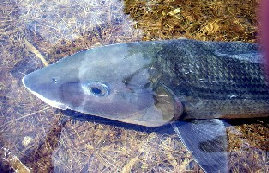
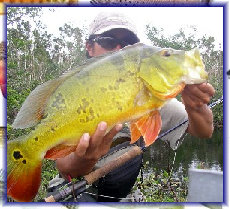
As part of the topic “I’m happy when,” I could think of nothing better than to write about my safe little haven in Steamboat, Colorado where I have spent so much time fishing for Northern Pike. My mind was instantly in my favorite place in the whole world. Thus, it was not difficult for me to imagine what I would be seeing, if I was actually there. I wrote of wild turkey gobbling in the distance, and massive elk coming to the riverbank for water on a cool crisp morning, as I looked up at the still snow capped and ever so majestic Rocky Mountains of Colorado standing right before me. Such scenery will be vivid in my mind for as long as I may live. Now that I look back on that particular night in which I wrote this paper, I realize how tuned into the paper I was. What started out as one half page turned into five. I just kept writing and putting my one personal insight of the things I had witnessed on the water into my paper. As much as I love the scenery, I still had to write something about the reason I was there and that was fishing. One particular story I mention involves a section of the river where old rusty cars bank the side of the river to prevent erosion. As I made a cast into the trunk of a ‘57 Chevy, a 38-inch pike came out of the trunk and slammed my fly! Such amazing predators they are. Pike are truly the toughest kids on the block. I went into great detail to describe the species and why I love fly fishing for them so much. As I recall, I wrote something of the nature, “Their sides lack the colorful jewell box flash of the rainbow trout. Instead they are camouflaged to their surroundings and have hooded eyes that seem to glare with evil intent just above their snout, which is lined with razor sharp teeth. They are atop their food chain, which is why fishing for them is such a battle between equals.” Through this paper, my passion for fly fishing was involuntarily revealed. How often can a person do their favorite thing in the world while surrounded by a place that God surely must have spent a little extra time on? I could have written 30 pages, but for purposes of the contest I had to keep the paper at a reasonable length.
As it turned out, the paper I had written for a measly 15 extra credit points had no impact on my grade in the class. What did happen was I won the writing competition of some 300 applicants. Through my own writing process and a passionate subject, I won one hundred dollars. The money is not all I received from the experience, however. It made me take a deeper look at myself as a writer and an avid angler. I have put so much time into both writing and fly fishing, it truly is special when the two can come together and create something as beautiful as both can be.
The elder Underwood was excluded on both counts from the Big Thompson, where conditions caused an ouzel to repeatedly bob, unflinching, beneath Zach's rod tip and wild mallards to huddle inside an angler's shadow.
But gusts powerful enough to knock a man off his feet weren't enough to keep tailwater trout from rising. Secure in that constant subsurface environment caused by the release of water from a dam, trout generally remain oblivious to external turmoil, responding instead to the availability of food, which, just past the midpoint of winter, consists chiefly of midges.
Because wind quickly swept away adult insects, these trout rose chiefly to emergers, thrusting dark noses just past the surface to inhale insects hatching in the film. The supreme difficulty lay in achieving a natural drift in the wind; a fly snapped off on the backcast might end up in a Kansas cornfield.
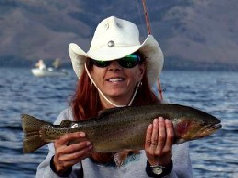
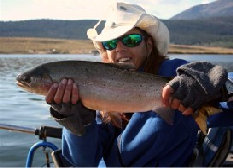
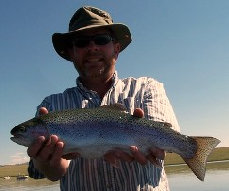
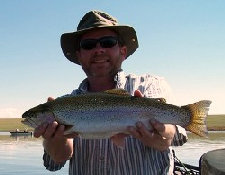
In part as a result from a Division of Wildlife enhancement project, Underwood consistently finds rainbows and browns in the 14-inch range, with an occasional specimen in the high teens. The 9 miles from the dam to Waltonia is protected by catch-and-release restrictions, the longest such designation in the state.
Underwood's favorite time is March and April, when the midge hatch intensifies and baetis begin their early spring frolic. Who knows? The wind might finally have blown itself out by then.
| Conditions at these popular tailwaters vary with flow and insect hatches. Daily water volume can be
verified using WaterTalk station codes issued by the Colorado Division of Water Resources, 303-831-7135. Flows listed below were reported
Monday afternoon. For other information, consult a local fishing shop.
Arkansas below Pueblo Reservoir: Consistent hatches of midges and baetis; good action for stocker rainbow at 73.8 cubic feet per second (CFS). Big Thompson: Sporadic midge hatches at 24.8 CFS, a normal winter flow. Blue: Fishing consistently well with midges and mysis shrimp; normal winter flow of 54 CFS. Fryingpan: Exceptional action with best winter flows in years at 160 CFS. Mostly midges, with a mix of mysis shrimp from heavy dam release. |
South Platte Cheesman Canyon: Fishing is agreeable on warmer days; at 73 CFS, slightly low for optimum results during sunny conditions.
South Platte below Spinney Reservoir: At 38.5 CFS, a very difficult level for fishing, with a propensity for ice on lower section.
South Platte Elevenmile Canyon: Fishing well on warm days in ice-free upper section. 37 CFS.
Taylor: Trout are spooky at a flow of 75 CFS. Long leaders and 7x tippets work best. Try small egg patterns and tiny midges or Barr emergers. Sporadic mysis activity.
Williams Fork: Fishing is good at Colorado River confluence for anglers who slog through deep snow; 65 CFS.
Yampa: Dry fly midge action on sunny days; try a midge nymph behind a size 14 gray scud pattern. 41 CFS.